Euro, shares gain on brighter economic outlook

LONDON (Reuters) - The euro hit an 11-month high against the dollar and European shares rose on Monday as the region's improving economic growth outlook and the declining prospects of further monetary easing bolstered demand.
The common currency peaked at $1.3404, its highest level since February 2012, producing a hefty gain of 2.5 percent since European Central Bank President Mario Draghi gave a more optimistic outlook for the economic recovery late last week.
Europe's FTSE Eurofirst 300 index, which has been rallying all year, added 0.2 percent in early trade while London's FTSE 100 <.ftse>, Frankfurt's DAX <.gdaxi> and Paris's CAC-40 <.fchi> all traded around 0.1-0.3 percent higher.
The moves came before release of euro zone industrial output data for November which is expected to show a rise of 0.1 percent month-on-month after a 1.4 percent fall in October, adding to signs of an improvement in activity over recent months.
"The mood in the euro zone has improved. And though things have not moved at the same pace in all countries, monetary and financial conditions are less tight, even in Spain," analysts at BNP Paribas said in a note.
Signs of a growth pickup in recent data from the United States and China, along with the easier monetary polices of major global central banks, have underpinned a broad rally in equity markets worldwide. The MSCI world equity index <.miwd00000pus> was trading near 18 month highs on Monday, although little changed on the day.
Chicago Federal Reserve chief Charles Evans added to the better sentiment. Evans, who is a voting member of the Fed's policymaking committee this year, said the U.S. economy is expected to grow 2.5 percent in 2013 and 3.5 percent in 2014.
Analysts expect further data this week to support demand for riskier assets, with U.S. and Chinese figures likely to show further momentum in the world's two biggest economies.
YEN SINKS
However, the Japanese yen bucked the stronger trend among the world's major currencies against the dollar when it touched a fresh a 2-1/2-year low of 89.67
The falls followed comments from new Prime Minister Shinzo Abe on Sunday calling on the Bank of Japan (BOJ) to set a 2 percent inflation target and pursue bolder monetary easing to end nearly two decades of deflation.
Tokyo markets were closed on Monday for a holiday but MSCI's broadest index of Asia-Pacific shares outside Japan <.miapj0000pus> rose a modest 0.3 percent on the statement, remaining near a 17-month peak set on Friday.
Commodity prices recovered after last week's decline. Brent crude gained 44 cents to $111.08 a barrel as fears of supply disruption in the Middle East resurfaced, while U.S. crude rose 67 cents to $94.23 a barrel.
Copper edged up 0.4 percent to $8,077 a tonne and gold was up 0.3 percent at $1,667.45 an ounce.
(Reporting by Richard Hubbard; editing by David Stamp)

Read More..

Oil rises near $94 on China, US recovery hopes

BANGKOK (AP) — Oil prices rose to near $94 on Monday, supported by signs of economic recovery in the U.S. and China.
Benchmark oil for February delivery was up 33 cents to $93.89 per barrel at late afternoon Bangkok time in electronic trading on the New York Mercantile Exchange. The contract dropped 26 cents to finish at $93.56 a barrel in New York on Friday.
Gordon Kwan, head of energy research at Mirae Asset Securities Ltd. in Hong Kong, said oil prices were rising on signs that the fragile economic recoveries in the world's two biggest economies appeared to be gaining traction. The U.S. housing market has shown steady improvement, while China's trade growth rebounded strongly in December.
"China and the U.S. appear to be on a very solid track of economic recovery. This supports oil prices at much higher levels." He said that prices were also moving up because of increased energy consumption in China, which is enduring its coldest winter in nearly three decades.
"There is the possibility that West Texas Intermediate could reach $95 per barrel in the coming days and Brent could go to $115," Kwan said.
Brent crude, used to price international varieties of oil, was up 27 cents to $110.91 per barrel on the ICE Futures exchange in London.
In other energy futures trading on Nymex:
— Wholesale gasoline was almost unchanged at $2.755 a gallon.
— Heating oil rose 1.5 cents to $3.023 a gallon.
— Natural gas rose 3.8 cents to $3.365 per 1,000 cubic feet.
Read More..

China mulls hiking investment quota for foreigners

HONG KONG (AP) — The head of China's securities regulator says Beijing is considering substantially raising the quota that foreign institutions are allowed to invest in the country's stock markets.
Guo Shuqing said at a conference on Monday that there was room to raise the limit by "at least 10 times, nine times."
He said that money invested through the quota system for foreign investors accounted for only 1.5 to 1.6 percent of China's total stock market. Guo said regulators wanted to make it easier for outsiders to issue or trade securities on Chinese markets.
Stock markets in China are largely out of bounds for foreign investors because of tight capital controls.
Guo is chairman of the China Securities Regulatory Commission.
Read More..

Soccer-Playmaker Sahin to return to Borussia Dortmund - media reports

BERLIN, Jan 11 (Reuters) - Playmaker Nuri Sahin will return to Bundesliga champions Borussia Dortmund after unsuccessful spells at Real Madrid and Liverpool, several German media said on Friday.
The 24-year-old Turkey international, who left for Real in 2011 after helping Dortmund to the Bundesliga title, failed to win a starting spot in Spain before joining Liverpool in August 2012 on a loan deal.
Dortmund did not comment on the reports but announced an unscheduled news conference for later on Friday.
Read More..

UPDATE 1-Soccer-I feel fine, Terry says after comeback from injury

LONDON, Jan 11 (Reuters) - Chelsea's former England captain John Terry said his knee felt "totally fine" after making his comeback for the club's under-21 team following two months on the sidelines.
The 32-year-old central defender played for 45 minutes on Thursday night, featuring as an over-age player in a 2-0 victory over neighbours Fulham.
Chelsea's interim manager Rafa Benitez confirmed the centre back would now be part of the first team squad for Saturday's Premier League game at Stoke City, but will not start.
"I have come through alright," Terry told Chelsea TV.
"Initially I was going to play between 30 and 45 (minutes) so I managed to get through the first half and the knee feels totally fine which is the main thing.
"Lungs are a little bit... which is natural, but it is good to get in 45 under my belt. It has been frustrating two months really.
"I felt fine, totally fine. Passing, tackling, everything felt fine. It's really positive to come through a game and hopefully give myself a chance to be back involved with the first team."
Terry, who has missed 16 games in all competitions, hurt his knee against Liverpool on Nov. 11, his first match back after serving a four-game ban for racially abusing Queens Park Rangers defender Anton Ferdinand.
"Maybe it is too soon to get back starting. The lads have been playing well as well, so I know better than anybody I have to wait my time and be patient and try to get back in the squad first, than the team after that," he said.
Chelsea, fourth in the Premier League - 14 points behind leaders Manchester United - travel to Stoke on Saturday looking to bounce back from a midweek home defeat by Swansea in the Capital One (League) Cup, semi-final first-leg.
Read More..

Soccer-City's Arsenal curse brings memories of the dark days

LONDON, Jan 11 (Reuters) - When Manchester City face Arsenal at the Emirates on Sunday, the Premier League champions will be looking to end a 37-year hoodoo and perhaps remove the last symbolic reminder of a period of tumultuous decline and fall.
The last time the blue half of Manchester's current Premier League duopoly tasted league victory in the red half of north London was on Oct. 4, 1975.
It would have been unforeseeable at the time that City, then one of the top-flight's leading clubs, would come close to financial annihilation as the first European trophy winners to be relegated to English football's third tier.
That victory at Arsenal, with City stalwart Tony Book at the managerial helm, was no great surprise at the time. League champions in 1968, City won the FA Cup in 1969 and the European Cup Winners' Cup in 1970.
After their 1975 Highbury win they went on to finish eighth in the old first division, to Arsenal's 17th, and also won the League Cup that season, the final trophy of the club's most successful period.
They finished runners up the following season but the following three decades were spent licking footballing wounds as Sunday's opponents Arsenal went on to add weight to an already heavily-laden trophy cabinet.
Twice relegated from the top flight in the 1980s and once in each of the proceeding two decades, 20 different men, with seven in the eighties alone, occupied the City hotseat after Book's first stint came to an end in 1979.
Their darkest hour came in 1998 when the club were relegated to the second division, or third tier of English soccer, the same year Arsenal won the double in the second season under manager Arsene Wenger.
PRESSING MOTIVE
Their subsequent rise from the ashes and a real threat of financial ruin to become world football's richest club under Abu Dhabi-stewardship that culminated in their first Premier League title last season, has not improved their fortunes against Sunday's opponents.
In the four years since Sheikh Mansour completed his takeover, City have lost two and drawn two of their Premier League visits to Arsenal's modern Emirates stadium, in itself a reminder of how much water has passed under the bridge since the teams met at Arsenal's Art Deco Highbury in 1975.
The present provides a more pressing motive for City, who could be 10 points behind league leaders Manchester United at kickoff on Sunday, to put an end to the 37-year winless streak.
"These records are made to be broken," goalkeeper Joe Hart told Talksport.
"We feel strongly that we can turn up anywhere and win.
"It has not happened at the Emirates. But it is not a case of us turning up and thinking we are going to lose.
"It is a great pitch, great atmosphere and it feels like you can go and express yourself. Hopefully that will be the case on Sunday."
City's visits to Arsenal have not been entirely fruitless. They did win a League Cup quarter-final there last season, but they have not scored a league goal at Arsenal since DaMarcus Beasley's effort in the 3-1 defeat in 2007.
"I wasn't aware it had been so long. Football is like that sometimes but 37 years is extraordinary and records like that are rare but there to be broken," City midfielder Gareth Barry told the club website (www.mcfc.co.uk).
"We have to go to the Emirates, play as well as we know we are capable of and see if we can put an end to our poor run of league results on their ground."
While City are still part of the race for the title, Arsenal's eyes are firmly fixed on finishing fourth and are currently four points adrift of Chelsea who currently occupy the final Champions League qualification place.
Read More..

Sony No Longer Shipping PlayStation 2 in Japan

You may have grown up with it. Your children may have, too.
Sony's PlayStation 2 home game console, released in 2000, was one of the most popular game consoles of all time, rivaled in sales only by the different kinds of Nintendo DS handheld console. It continued to be sold new on store shelves until just recently, even years after Sony launched its PlayStation 3 successor.
Now, however, Sony's sent out its last shipment of new "PS2" consoles for the Japanese market, according to Japanese gaming news site Famitsu (as reported by Polygon's Emily Gera). Some other regions are continuing to receive shipments for now, but the heart of the PlayStation 2 phenomenon has finally stopped beating.
A gaming legend
Japanese PlayStation fans saw thousands more titles released in their language than English-speaking players. The PlayStation 2 was especially well-known for its role-playing games, such as the MMORPG Final Fantasy XI, which was designed so closely around the PS2's capabilities that its Windows PC version uses almost entirely the same graphics and controller-based interface.
New PS2 games continue to ship; Final Fantasy XI is even getting a full-fledged, retail-boxed expansion pack this March. It'll only support the PS2 in Japan, however, where dedicated players continue to use the original "fat" PS2 consoles with the hard drive expansion slot. Internationally, it will only support the PC and Xbox 360.
PS2 games in a post-PS2 world
The first PlayStation 3 consoles -- infamous for the silence which ensued at the Sony event where their price at launch was announced to be "599 U.S. dollars" -- were backwards-compatible with the vast majority of PlayStation 2 and original PSOne games. Sony achieved PS2 backwards compatibility, however, by including the PS2's actual "Emotion Engine" and "Graphics Synthesizer" chips inside each PS3, essentially making it two game consoles in one (and helping to drive up that launch price).
A redesign bumped down the price some, but at the cost of removing the Emotion Engine chip, which caused the redesigned PS3 consoles to sometimes have bugs or fail to play certain games. Today's PS3 consoles lack both chips, which means that while they play PSOne games just fine, they don't support PS2 game discs at all and can't be upgraded to do so.
The legend lives on?
Sony has made HD remakes of certain PS2 titles, and republished others for the PS3 under the "PlayStation 2 Classics" brand. Dozens of such titles have been re-released as digital downloads in the PlayStation Network store.
This method of playing a PS2 game on the PS3, however, involves essentially buying the game again (assuming that it's even in the store), sort of like Sony's method of playing PlayStation Portable games on the Vita. Even rebuying the games for the PS3 doesn't ensure continued playability on modern Sony consoles; the upcoming "PlayStation 4" (not its actual name) reportedly won't be able to play games made for the PS3.
Jared Spurbeck is an open-source software enthusiast, who uses an Android phone and an Ubuntu laptop PC. He has been writing about technology and electronics since 2008.
Read More..

Ubuntu se mete en los celulares con un sistema operativo propio

Al igual que otras plataformas que buscan una convergencia entre el mundo móvil y la PC, Canonical confirmó el arribo de su sistema operativo Ubuntu a los dispositivos móviles. Disponible en una primera instancia como una instalación no oficial para la línea de smartphones Nexus 3, la versión de Linux utilizada en más de 20 millones busca posicionarse como una alternativa ante un mercado dominado por compañías como Apple y Google, junto a las propuestas de Microsoft con Windows Phone y Research in Motion con sus teléfonos BlackBerry.
La compañía dio un primer paso en febrero de 2012 con Ubuntu for Android , una distribución para "mejorar" el Android convencional.
La versión actual es un sistema operativo que sólo comparte con Android el uso de sus drivers (ambos están basados en Linux), pero no usa una máquina virtual Java, por lo que los 700.000 programas con las que cuenta Android no estarán disponibles directamente. Ubuntu tendrá su propia suite de aplicaciones, y permitirá la suma de nuevas que estén programadas en HTML5 o sean nativas.
Canonical también planea lanzar un teléfono de diseño propio que llegaría al mercado en 2014, pero no brindó mayores detalles sobre el fabricante involucrado. Los recientes cambios en la interfaz de Ubuntu, denominada Unity, marcaron una tendencia en la distribución hacia la interacción en pantallas sensibles al tacto, y este lanzamiento representa un primer paso de la distribución para ingresar en el mundo móvil de los smartphones y las tabletas.
Las prestaciones de una PC, en un dispositivo de bolsillo
Según Mark Shuttleworth, CEO de Canonical, en un principio esta versión de Ubuntu apunta a los entusiastas de la plataforma, pero con una rápida expansión hacia el resto de los usuarios. "Por primera vez en la historia los usuarios de los teléfonos celulares pueden tener las prestaciones completas que tiene en una PC, y tenemos una ventaja en esto", dijo el ejecutivo.
Read More..

Samsung’s New Smart TV Software Development Kit Supports Linux and Mac O/S

Samsung Electronics announced that it will be releasing the Smart TV SDK (Software Development Kit) 4.0 at the 2013 International Consumer Electronics Show (CES) from January 8th to 11th, 2013. The Smart TV SDK will allow Smart TV software development on Linux and Mac, in addition to Windows O/S.

Up till now, Samsung's Smart TV software development only supported Windows O/S. However, the new SDK 4.0 allows for the development of Smart TV software on Linux and Mac systems. This is expected to lead to active development of Smart TV software in some areas where non-Windows O/S are widely used.

Samsung is the first in the TV industry to provide a local cloud development environment. This environment enables the development of content based on connection between web services by utilizing an open API (Application Programming Interface).

Moreover, Smart TV SDK 4.0 provides a local cloud development environment that allows developers who use the Mac O/S to team up with other developers who use Windows O/S. As a result, many developers can engage in a team effort, resulting in greater software development efficiency and reduced costs.

By expanding and supporting HTML5 in the Smart TV SDK 4.0, a standard programming language, Samsung has laid the foundation for many software developers to easily take part in development of Smart TV applications.

With HTML5, Samsung has been able to build an integrated environment that supports the development of convergence applications. This enables Samsung's Smart TVs to interact and communicate with external devices.

And to promote the active development of Smart TV software through Samsung's Smart Interaction function, the company strengthened the voice and gesture recognition functions on its Smart TVs.


Please visit our booth to experience this future technology firsthand. Samsung's product line will be displayed from January 8th to 11th at booth #12004 in the Central Hall of the Las Vegas Convention Center.
Read More..

Japan's Abe to visit Southeast Asia to boost economic ties

26, 2012. REUTERS/Toru Hanai
TOKYO (Reuters) - Japanese Prime Minister Shinzo Abe's first overseas trip will see him visit Indonesia, Vietnam and Thailand in January, aiming to bolster ties with the growing Asian economies as relations with Beijing stay tense.
Abe had hoped to first visit Washington in order to strengthen Japan's alliance with the United States, but the visit was postponed due to President Barack Obama's tight schedule, Japan's top government spokesman said on Thursday.
Chief Cabinet Secretary Yoshihide Suga said the ASEAN-member countries that Abe will visit are at the forefront of Asian economic growth and Japan, mired in deflation and stuck in its fourth recession since 2000, should expand economic ties.
"It's important to strengthen the cooperation with the ASEAN countries to ensure peace and prosperity in the Asia-Pacific region," said Suga, adding that the countries were also strategically important for Tokyo.
Japan's relations with China took a dive last September after a flare up in a long-standing territorial dispute over islets in the East China Sea claimed by both countries.
Aiming to offset the economic impact of the feud, Abe has been reaching out to other Asian neighbors, sending its foreign minister on a tour around Southeast Asian countries and dispatching special envoys to South Korea and Russia.
Suga, however, stressed that Abe's trip was not aimed at counter-balancing China's influence in the region, which has seen an increase in territorial disputes amid fierce competition for natural resources.
"China is an important country for Japan," he said stressing the strategic nature of Tokyo's bilateral ties with the world's second largest economy.
Before his election last month, Abe had pledged a tough stance in the territorial row with China, but experts are hoping he will take a pragmatic stance now that he is in power.
Abe came to power partly on a nationalist platform and wants to revise Japan's U.S.-drafted constitution adopted after World War Two. U.S. officials have indicated they would like to see Tokyo loosen constitutional restraints on its military to allow a bigger global security role.
But Abe's government will stand by a landmark 1995 apology for Japan's wartime aggression, said Suga. Any revision to would upset Asian nations that suffered from Tokyo's past militarism.
Read More..

China newspaper publishes after deal ends standoff

GUANGZHOU, China (AP) — An influential weekly newspaper whose staff rebelled to protest heavy-handed censorship by China's government officials published as normal Thursday after a compromise that called for relaxing some intrusive controls but left lingering ill-will among some reporters and editors.
The latest edition of the Southern Weekly bore no hints of the dispute that erupted last week over a New Year's editorial that was rewritten to praise the Communist Party and that drove some staff to stop work in protest. Still fuming, some editors and reporters tried late Wednesday to insert a carefully-worded commentary praising the newspaper as a tribune of reform, but were rebuffed by management, an editor said.
The editor, who asked not to be named because he had been repeatedly warned not to talk to foreign media, described the mood among editorial staff as indignant. He predicted that some would resign, either voluntarily out of anger or forced out by management.
Academics spoke of a coming reckoning by authorities to reassert control at the Southern Weekly and any other media that might take encouragement.
"Overall, the authorities do not want this situation to spread," Peng Peng, a political science researcher at the Guangdong province Social Sciences Academy, told reporters.
The weeklong fracas at the Southern Weekly evolved quickly from a row over censorship at one newspaper to a call for free speech and political reform across China, handing an unexpected test to the party leadership headed by Xi Jinping just two months into office.
Hopes that the dispute would strike a blow against censorship initially ran high. Internet microblogs crackled with messages of support. Liberal-minded academics wrote open letters. And hundreds of people this week gathered outside the newspaper's offices off a busy street in the southern commercial center of Guangzhou, waving signs that called for freedom of expression.
But expectations for change began fizzling Wednesday as a compromise to end the dispute took shape. Under the deal, according to the editor and another staff member, editors and reporters would not be punished for protesting, and propaganda officials would no longer directly censor content prior to publication, though directives, self-censorship, threats of dismissal and many other longstanding measures would stay in place to ensure obedience to the party.
The outpouring challenged one of the key levers of party rule — its right to control the media and dictate content — and officials pushed back this week to reassert authority.
"This crisis rings alarm bells for journalists and liberal intellectuals. The new government might kick-start economic reforms in certain areas, to ensure continued growth. But swift political reforms are not on the top leaders' agenda, as they are still calculating resistance from conservative blocs," Zhang Hong, deputy editor-in-chief of the business newspaper Economic Observer, wrote in a commentary Thursday in Hong Kong's South China Morning Post.
In a further sign of tightening, police attempted Thursday to prevent more of the protests outside the compound housing the Southern Weekly and its parent company, the Nanfang Media Group, in Guangzhou, a city long at the forefront of reforms. About 30 police officers guarded the area and ordered people to move on, chasing away any who wouldn't and detaining at least one local university student who came with a group of friends.
The standoff at the Southern Weekly echoed through the newsroom of the Beijing News, which is co-owned by Nanfang Media and has a reputation for aggressive reporting. Editors at the newspaper all week defied an order to run a commentary that many other newspapers carried that blamed resistance to censorship on meddling foreign forces, but a propaganda official visited the newspaper late Tuesday and forced publication of the commentary.
The Southern Weekly dispute was touched off after provincial propaganda chief Tuo Zhen rewrote the New Year's editorial, which called for better constitutional government, to insert heavy praise for the party. The revised editorial was not submitted for review by editors before publication, violating an unwritten practice in censorship and enraging the staff, which saw it as an attack.
The Southern Weekly has been a standard-bearer for hard-edged reporting and liberal commentary since the 1990s. Throughout, senior party politicians and propaganda functionaries have repeatedly attempted to rein in the newspaper, cashiering editors and reporters who breach often unstated limits.
The special commentary that reporters and editors tried late Wednesday to insert into Thursday's edition was meant to extol that legacy, said the editor. Many other editors and reporters declined comment or refused to answer phone calls and emails. Dai Zhiyong, the columnist who drafted the original New Year's editorial, also declined comment, but posted to his Twitter-like microblog account an essay he had written three years ago; its title: "Before becoming free, one must suffer."
Even if censorship largely remains intact, the standoff has showed the breadth of support independent-minded media like Southern Weekly have among many Chinese, who are wired to the Internet and increasingly sophisticated in their expectations of the government. Peng, the politics scholar, said the confrontation showed that the party's censorship system needs to change, though the pace may not be as quick as many in the media would like.
"To put it simply, the media cannot go beyond the existing system to pursue radical reform, but the management method also needs to change," said Peng.
Read More..

US missiles kill 5 suspected militants in Pakistan

PESHAWAR, Pakistan (AP) — Pakistan intelligence officials say U.S. drone-fired missiles have hit a house in the country's northwest tribal region, killing five suspected militants.
The officials say the attack occurred Thursday in a village near Mir Ali, one of the main towns in the North Waziristan tribal area, the main sanctuary for Taliban and al-Qaida militants in Pakistan.
The officials spoke on condition of anonymity because they were not authorized to talk to the media.
Read More..

Report: Armstrong weighs doping admission

AUSTIN, Texas - The New York Times reported Friday that Lance Armstrong, who has strongly denied the doping charges that led to him being stripped of his seven Tour de France titles, has told associates he is considering admitting to the use of performance-enhancing drugs.
The report cited anonymous sources and said Armstrong was considering a confession to help restore his athletic career in triathlons and running events at age 41. Armstrong was been banned for life from cycling and cannot compete in athletic events sanctioned by the U.S. Anti-Doping Agency and the World Anti-Doping Agency.
Yet Armstrong attorney Tim Herman denied that Armstrong has reached out to USADA chief executive Travis Tygart and David Howman, director general of the World Anti-Doping Agency.
Herman told The Associated Press he had no knowledge of Armstrong considering a confession and said: "When, and if, Lance has something to say, there won't be any secret about it."
Armstrong, who recovered from testicular cancer that had spread to his lungs and brain, won the Tour de France from 1999-2005. Although he has vehemently denied doping, Armstrong's athletic career crumbled under the weight of a massive report by USADA detailing allegations of drug use by Armstrong and his teammates on his U.S. Postal Service teams.
The report caused Armstrong to lose most of his personal corporate sponsors and he recently stepped down from the board of Livestrong, the cancer-fighting charity he founded in 1997.
Armstrong is facing other legal hurdles.
The U.S. Department of Justice is considering whether to join a federal whistle-blower lawsuit filed by former Armstrong teammate Floyd Landis. A Dallas-based promotions company has also said it wants to recover several million dollars paid to Armstrong in bonuses for winning the Tour de France. The British newspaper The Sunday Times has sued Armstrong to recover $500,000 paid to him to settle a libel lawsuit.
Read More..

If Lance Armstrong is coming clean, he owes hundreds of apologies to those he bullied

So now, according to the New York Times, Lance Armstrong is considering coming clean and admitting the entire thing was a lie; that he did indeed use performance-enhancing drugs and blood transfusions to win all those Tour de France titles.
And this would be news to … um, anyone?
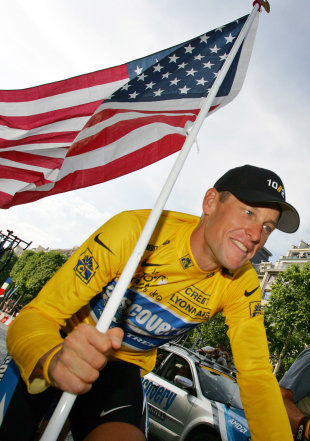
Certainly not the anti-doping officials and cycling administrators who the Times reports Armstrong has been working with to set up a potential deal that might allow him to return to competitive athletics, mostly ironman triathlons.Lance Armstrong was stripped of his seven Tour de France titles last year. (AP)
Armstrong's lawyer would only cryptically tell the Times, "I do not know about [coming clean]. I suppose anything is possible, for sure."
Here's guessing this is less about the thrill of competition and more about Armstrong realizing that fewer and fewer people are paying attention to him, let alone believing his fable. Here's guessing he has come to the stark realization that there isn't any other way out of that sink hole. It's better to be a humble hypocrite than a nearly forgotten joke.
It's been painfully obvious that Lance Armstrong cheated for years and years now. There have been mountains of evidence, countless media investigations, a parade of former friends and teammates turned accusers and finally a USADA-produced 1,000 page report that is astounding in its detail.
And there's been, perhaps most damning of all, the fact that just about every other cyclist of note during Armstrong's generation was busted for doping. So to believe the Armstrong fairy tale is to believe that in a sport full of healthy cheats, it was the clean cancer survivor that was somehow the best.
It never made any sense.
There were plenty of people out there, myself included, who simply didn't care. Cycling is a dirty sport. He still had to beat the others. It wasn't clean, but it may have been a relatively even playing field. Besides, what he did off the bike was more important. He inspired so many people across the cancer wards of the world. He raised spirits. He raised money. He raised awareness.
[Related: Olympic cyclist killed in biking accident]
Of all the atrocities to get angry about, a guy who was less than honest so he could ride his bike real fast around France ranks pretty low.
The thing is, climbing up from the depths of chemotherapy to the point you could get back in a peloton racing up the Alps is a heck of a story. But Armstrong could never leave it at that, and that's why this has to be more than just an admission, it needs to be an apology. Hundreds of them, actually.
They say it's never too late for the truth, but this case may test that theory.
Throughout Armstrong's career, he hasn't just denied he doped, he's tried to destroy anyone who suggested otherwise. He and his henchmen have bullied, intimidated and threatened. They attacked reputations and fought dirty in ways that belied what he was supposed to be about. Everyone was just a jealous liar. Careers were ruined.
[Related: British paper sues Lance Armstrong]
There was ugliness like the time Betsy Andreu, wife of longtime Armstrong teammate Frankie Andreu, got a voicemail declaring, "I hope somebody breaks a baseball bat over your head." That was after she'd already been dragged through the mud and declared a vindictive nut.
"A playground bully,'' one of Armstrong's old teammates, Jonathan Vaughters, once described him.
So now it's all forgiven? Now he just wants to say, OK, I did it?
Maybe this is a redemption story if he acted differently in the past. Maybe it would be easier to understand that this was a lie that got so big, with so many people counting on it to be true, that he couldn't get out from under it. Maybe this would be easy.
Lance Armstrong didn't hold back in going after his accusers. (AP)But after all the damage was done, after all the times his lawyers napalmed someone's reputation, after all the times Armstrong took the people closest to him, ones who understood the truth and tried to bury them, this can't be just admitting to something that any thinking person long ago was fairly certain he did.
Only his sizeable ego could think that's enough.
No, if this is a new day for Lance, then it needs to be about someone other than just Lance.
This needs to be about making amends, publicly and painfully, one by one, name by name, to all the people he and his machine tried to run over, all the people whose crime was merely wanting to acknowledge the truth long before the schoolyard bully ran so short of friends he too finally realized it was his only option.

Read More..

Report: Lance Armstrong weighs doping admission

AUSTIN, Texas (AP) — The New York Times reported Friday that Lance Armstrong, who has strongly denied the doping charges that led to him being stripped of his seven Tour de France titles, has told associates he is considering admitting to the use of performance-enhancing drugs.
The report cited anonymous sources and said Armstrong was considering a confession to help restore his athletic career in triathlons and running events at age 41. Armstrong was been banned for life from cycling and cannot compete in athletic events sanctioned by the U.S. Anti-Doping Agency and the World Anti-Doping Agency.
Yet Armstrong attorney Tim Herman denied that Armstrong has reached out to USADA chief executive Travis Tygart and David Howman, director general of the World Anti-Doping Agency.
Herman told The Associated Press he had no knowledge of Armstrong considering a confession and said: "When, and if, Lance has something to say, there won't be any secret about it."
Armstrong, who recovered from testicular cancer that had spread to his lungs and brain, won the Tour de France from 1999-2005. Although he has vehemently denied doping, Armstrong's athletic career crumbled under the weight of a massive report by USADA detailing allegations of drug use by Armstrong and his teammates on his U.S. Postal Service teams.
The report caused Armstrong to lose most of his personal corporate sponsors and he recently stepped down from the board of Livestrong, the cancer-fighting charity he founded in 1997.
Armstrong is facing other legal hurdles.
The U.S. Department of Justice is considering whether to join a federal whistle-blower lawsuit filed by former Armstrong teammate Floyd Landis. A Dallas-based promotions company has also said it wants to recover several million dollars paid to Armstrong in bonuses for winning the Tour de France. The British newspaper The Sunday Times has sued Armstrong to recover $500,000 paid to him to settle a libel lawsuit.
Read More..

Pennies over patriotism? Stars move to tax havens

 France's Socialist government is introducing a 75-percent income tax on those earning over €1 million ($1.3 million), leading some of the country's rich and famous to set up residency in less fiscally demanding countries.
Here's a look at some big names in France and elsewhere whose changes of address over the years have meant lighter taxes.
DEPARTING DEPARDIEU
The French prime minister has accused actor Gerard Depardieu of being "pathetic" and "unpatriotic," saying he set up residence in a small village just across the border in neighboring Belgium to avoid paying taxes in France.
The office of the mayor in Depardieu's new haunts at Nechin, also known as the "millionaire's village" for its appeal to high-earning Frenchmen, said that for people with high income, like Depardieu, the Belgian tax system, capped at 50 percent, is more attractive.
Depardieu, who has played in more than 100 films, including "Green Card" and "Cyrano de Bergerac," has not commented publicly on the matter.
BEATLE TAX
In 2005, the Beatles' Ringo Starr took up residency in Monaco, where he gets to keep a higher percentage of royalties than he would in Britain or Los Angeles. France's tiny neighbor Monaco, with zero percent income tax for most people, has obvious appeal for the 72-year-old drummer and his estimated $240 million fortune.
The Beatles' resentment of high taxes goes back to their 1960s song "Taxman." George Harrison penned it in protest of the British government's 95 percent supertax on the rich, evoked by the lyrics: "There's one for you, nineteen for me."
Harrison reportedly said later, "'Taxman' was when I first realized that even though we had started earning money, we were actually giving most of it away in taxes."
LICENSE TO DODGE?
Former "James Bond" star Sean Connery left the U.K. in the 1970s, reportedly for tax exile in Spain, and then the Bahamas — another spot with zero income tax and one of the richest countries per capita in the Americas. His successor to the 007 mantle, Roger Moore, also opted for exile in the 1970s — this time in Monaco — ensuring his millions were neither shaken nor stirred.
EXILE ON MAIN ST.
In 1972, The Rolling Stones controversially moved to the south of France to escape onerous British taxes. Though it caused a stink at the time, it spawned one of the group's most seminal albums, "Exile on Main St." The title is a reference to their tax-dodging. In 2006, British media branded them the "Stingy Stones" with reports that they'd paid just 1.6 percent tax on their earnings of $389 million over the previous two decades.
FISCAL HEALING
In 1980, U.S. singer Marvin Gaye moved to Hawaii from L.A. to avoid problems with the Internal Revenue Service, the American tax agency. Later that year, Gaye relocated to London after a tour in Europe. Gaye, whose hits include "Sexual Healing" and "I Heard it Through the Grapevine" settled in Belgium in 1981. He was shot to death in 1984.
Read More..

State tax revenues continue growing in third quarter

WASHINGTON (Reuters) - State tax revenues have grown for more than two years, but they are still suffering the effects of the 2007-2009 recession, according to a report released by the Rockefeller Institute of Government on Thursday.
Using preliminary data, the New York research group found that collection from major taxes increased in 47 states in the third quarter of 2012 from a year before, marking the 11th straight increase.
The recession caused states' revenues to plummet to lows not seen in decades over the course of five quarters. That forced almost all states to make emergency spending cuts, raise taxes, borrow and turn to the federal government for help just as the newly jobless and homeless increased demand for their services.
While revenues have been growing, the increases have been small. According to the institute, revenues "are still far below where they would have been in the absence of the Great Recession." Moreover, when adjusted for inflation, revenues are 5 percent below the peaks they reached in fiscal 2008, the last year before the recession devastated their budgets.
Rockefeller found that personal income tax collections were up 4.5 percent in the quarter ending in September, and sales taxes grew 3.1 percent. Corporate income taxes, which provide only a sliver of revenues, fell 0.5 percent.
In the third quarter of 2011, personal income tax collections surged 10.2 percent.
Delaware had the largest increases in overall tax collections in the third quarter, 11.7 percent, followed by Colorado, 10.3 percent.
Read More..

Muni tax break under threat from bipartisan scrutiny in congress

WASHINGTON (Reuters) - The tax break that U.S. states, cities and counties get on the bonds they issue is in growing jeopardy now that Republicans, in addition to Democrats, are considering limits on the exemption.
As part of the "fiscal cliff" negotiations to raise more federal government tax revenue, Republican lawmakers have joined Democrats in reevaluating the costly tax break, said Republican congressional aides and lobbyists.
Municipal bonds issued by states and localities are a $3.7 trillion U.S. market underpinned by a law that exempts their interest income from taxation. This allows states and localities to tap capital markets more cheaply than private-sector borrowers such as banks and corporations.
"The muni bond exemption is on the table, not only during tax reform, but also during the 'fiscal cliff,'" said Mike Nicholas of the Bond Dealers of America, a lobbying group for fixed-income securities dealers and banks.
That the tax break - deeply embedded in the economy and vital to state and local governments - would draw the interest of Republicans shows how far Washington has come in a short time in considering potentially dramatic tax-and-spending changes.
As the United States grapples with a huge budget deficit and a complex tax code that has not been revamped in 26 years, even once politically untouchable tax breaks are being questioned.
The "fiscal cliff" refers to sharp tax increases and spending cuts that take effect in 18 days unless Congress intervenes soon.
Some lawmakers from both parties are calling for a comprehensive tax code overhaul in 2013 and groups concerned with the muni bond exemption are worried.
"We have not felt this threat level being this real in a long time," said David Parkhurst, legislative director with the National Governors Association, which represents the leaders of U.S. states that rely heavily on the muni bond tax exemption.
SUBSIDIZING STATES, LOCALITIES
The exemption benefits bond investors on one side of the market and state and local governments on the other. Effectively a subsidy for states and localities, the muni exemption cost U.S. taxpayers about $26.2 billion in 2011.
President Barack Obama in 2011 included the exemption among items subject to his proposed 28-percent cap on deductions and other tax breaks for individuals earning more than $200,000.
That proposal alarmed muni bond issuers and investors, who were already on edge because of a proposal to kill the exemption entirely in 2010's Simpson-Bowles deficit reduction plan.
Now, Republicans are rethinking their traditional reluctance to tinker with muni bonds, largely because they want to find ways to increase federal revenues without raising tax rates.
Phasing out the muni bond tax break for individual taxpayers earning more than $200,000 could raise about $10 billion a year - or about $100 billion over a decade - Republican aides said.
In the fight over the "fiscal cliff," Republicans hope to refute Obama's argument that real deficit reduction cannot be achieved without raising tax rates on high-income Americans.
Senator Orrin Hatch, the top Republican on the Senate Finance Committee, said tax breaks of all sorts need to be weighed in the effort to raise revenue and cut the deficit, but that "they are not easy to get rid of."
FROM STATES TO SCHOOLS
New issuance of tax-exempt bonds is expected to hit about $400 billion in 2013, up from about $370 billion this year, according to investment bank Loop Capital Markets LLC.
Jurisdictions that issue tax-exempt bonds range from states to cities, counties and school districts. They defend the bonds as vital to transportation, infrastructure and other public projects, which would be threatened by an exemption roll-back.
"It certainly couldn't come at a worse time," New York State Comptroller Thomas DiNapoli told Reuters last week, referring to the devastation the region suffered during Hurricane Sandy.
"Even before the storm, we had tremendous infrastructure needs that localities were trying to address and now we're going to have even more."
It is unclear exactly what sort of limitations Republicans have in mind. The Obama proposal would apply to all bond issues.
Citigroup Inc muni bond strategist George Friedlander has estimated that Obama's cap, if enacted, would raise state and local government borrowing costs.
The "fiscal cliff" talks and a possible tax code overhaul next year pose "a clear and present danger" for muni bond issuers and investors, Friedlander said in a recent research report.
Read More..

Cricket-South Africa beat New Zealand by an innings and 27 runs

CAPE TOWN, Jan 4 (Reuters) - South Africa beat New Zealand by an innings and 27 runs on the third day of the first test on Friday.
Scores: New Zealand 45 (V. Philander 5-7) and 275 (D. Brownlie 109, B. McCullum 51); South Africa 347 for eight declared (A. Petersen 106, A.B. de Villiers 67, H. Amla 66, J. Kallis 60). (Reporting by Michael Todt; Editing by John Mehaffey)
Read More..

Cricket-South Africa v New Zealand 1st test scoreboard

CAPE TOWN, Jan 4 (Reuters) - Scoreboard on the third day of
the first test between South Africa and New Zealand at Newlands
on Friday.
New Zealand first innings 45 (V. Philander 5-7)
South Africa first innings 347 for eight declared
(A.Petersen 106, H.Amla 66, J.Kallis 60, AB de Villiers 67)
New Zealand second innings
M. Guptill c Amla b Steyn 0
B. McCullum lbw b Peterson 51
K. Williamson c Petersen b Kallis 15
D. Brownlie c Peterson b Morkel 109
D. Flynn c de Villiers b Kallis 14
BJ Watling c Smith b Philander 42
J.Franklin b Steyn 22
D.Bracewell c Petersen b Philander 0
J.Patel b Steyn 8
T.Boult not out 2
C.Martin run out 0
Extras (b-1 lb-8 w-3) 12
Total (all out, 102.1 overs) 275
Fall of wickets: 1-0 2-29 3-118 4-155 5-229 6-252 7-252
8-265 9-274 10-275
Bowling: Steyn 30-6-67-3, Philander 24-8-76-2 (1w), Morkel
21-6-50-1 (1w), Kallis 11.1-3-31-2 (1w), Peterson 16-6-42-1
New Zealand won the toss and elected to bat
Result: South Africa won by an innings and 27 runs
Read More..